Long Live Reorders
Subscriptions Are Dead
The subscribe-and-save box didn't die. Well. Not exactly. What died is the belief that they're the only way to earn recurring revenue. Subscriptions still work beautifully for the customers who actually want them. They just never covered everyone. Bold rePete® was built to cover the rest, with repurchase reminder nudges timed to how shoppers actually shop.

The Subscription Model Hit a Wall
For a decade, recurring billing was pitched as the whole answer to repeat revenue. Subscribe, save, set it, forget it. In 2026 the forgetting stopped.
47%
of consumers have cancelled at least one subscription this year
31%
cancellation rate in 2024
40%+
of subscription churn is involuntary, often from failed cards
~50%
of cancelled subscribers later resubscribe
Did you know that 47% of consumers have cancelled at least one subscription this year, that's up from 31% back in 2024. And everyone's research keeps surfacing the same signs of subscription fatigue. The cancellation reflex now shows up across categories. 40% or more of subscription churn is involuntary, the quiet kind that follows a failed card rather than a conscious choice. Roughly half of cancelled subscribers later resubscribe, so the relationship rarely ends, it simply goes quiet.
What the obituary leaves out
Here is the part the eulogy skips. Subscriptions were never built to capture the occasional buyer. They capture the committed few who will commit to a calendar. Everyone else slips through. The sometimes shopper. The seasonal restocker. The buyer whose pantry empties on no fixed schedule.
The fatigue rises, that gap widens. The committed minority subscribes. The episodic majority does not, and most of a store's repeat revenue lives inside that majority. A subscription program that ignores them is leaving the larger half of the opportunity on the table.

Why Rigid Calendars Keep Missing
Subscriptions run on a billing cycle. Customers run on their actual lives. No one finishes a jar of collagen supplements, a box of their pet's favorite treats, or their bags of gourmet coffee beans on a tidy thirty day schedule.
One shopper drains a protein powder tub in 35 days. Another takes 46. A household in training burns through it in 21. Fixed cycles treat all three the same and get all three wrong. Reminder nudges sent too early read like cash grabs. But when they're sent too late the reorder's already been reordered from some other lucky merchant.
Then there is the exit. When signing up takes one click and cancelling takes a phone call, fatigue curdles into resentment, and a model that traps people is a model on borrowed time.

The Athlete
High-frequency buyer
21 days
to finish a tub of protein

The Weekend Warrior
Casual-frequency buyer
46 days
to finish a tub of protein

The Healthy Family
High-volume buyer
35 days
to finish a tub of protein
With rePete®
Personally timed nudges
Reorder at the perfect time
Higher LTV, zero fatigue
rePete® is not a subscription replacement.
It works alongside your subscriptions platform, picking up the "sometimes" customers and turning them into a stream of repeat revenue.
Reorders, Reconsidered
Bold rePete® keeps the useful half of the subscription idea, predictable repeat revenue, and drops the half customers resent, the lock-in. It studies how each shopper actually buys, predicts when they will run low, and sends a reminder nudge at the moment they are ready to buy again.
No contract. No commitment. One tap to reorder.
Call them repurchase reminders, replenishment reminders, or reorder reminders. rePete® sends these reminder nudges by SMS, email, on-site, and push, on whichever channel each customer already lives on. The nudge feels personal because the timing is personal, built from real purchase behavior rather than a generic monthly default. And because rePete® is 100% commission based, it costs the retailer nothing until it earns. There is no risk in testing the thesis.
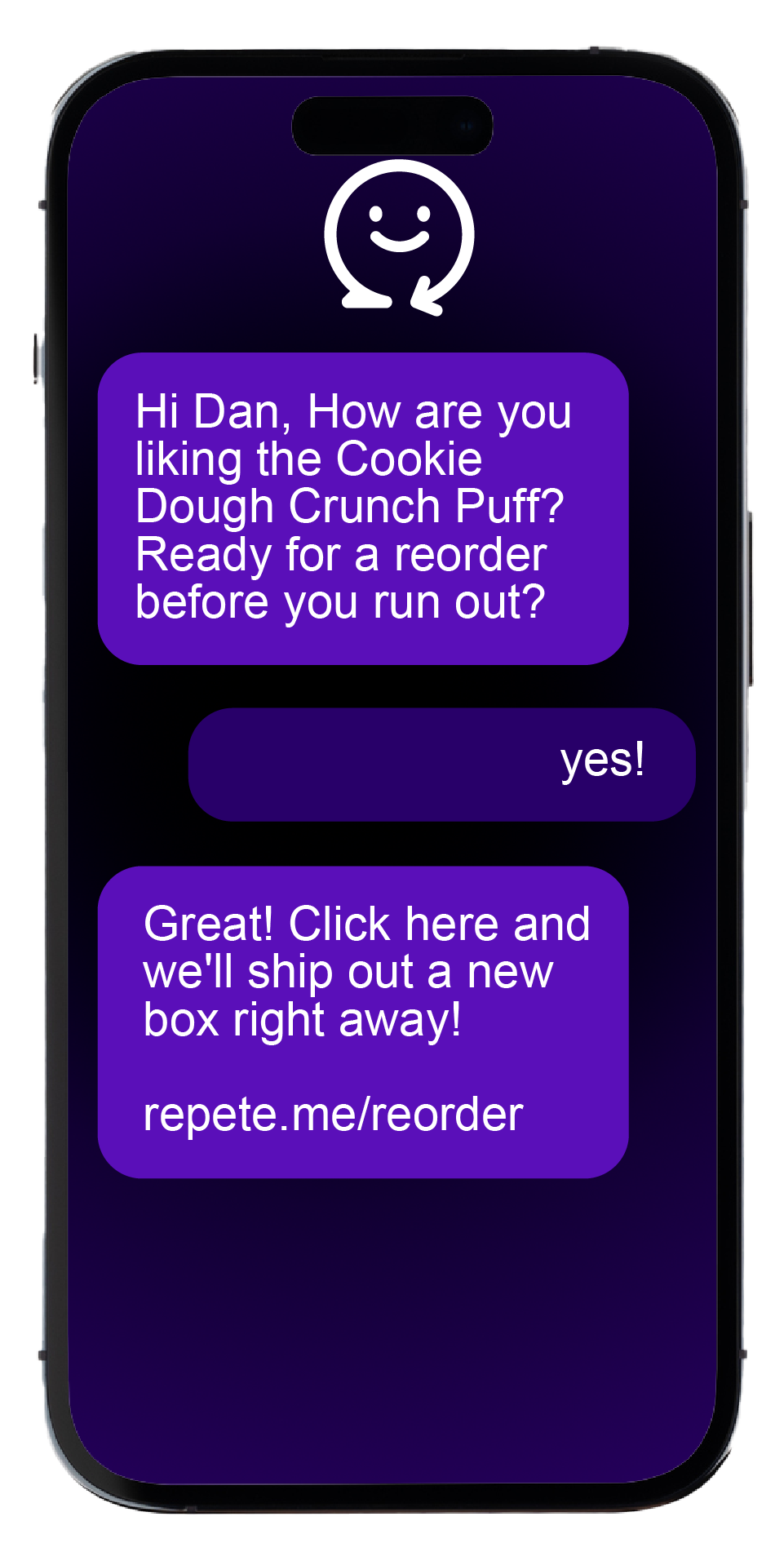

How rePete® works
Four steps. Zero friction.
Learns the buying history
rePete® studies each customer's order cadence and product behavior.
Predicts the reorder window
It works out when each shopper is likely to run out and ready to restock.
Sends the reminder nudge
A polite, on-brand message goes out by SMS, email, on-site, or push.
One tap to reorder
The shopper buys again in a single click, with smart add-ons that lift average order value.
Used by brands that take repeat revenue seriously